
Local SEO
The service-area page checklist for businesses that depend on location intent
Local pages need more than a city name swapped into generic copy. They need useful service detail, location proof, internal links, and a clear reason for buyers in that area to trust you.
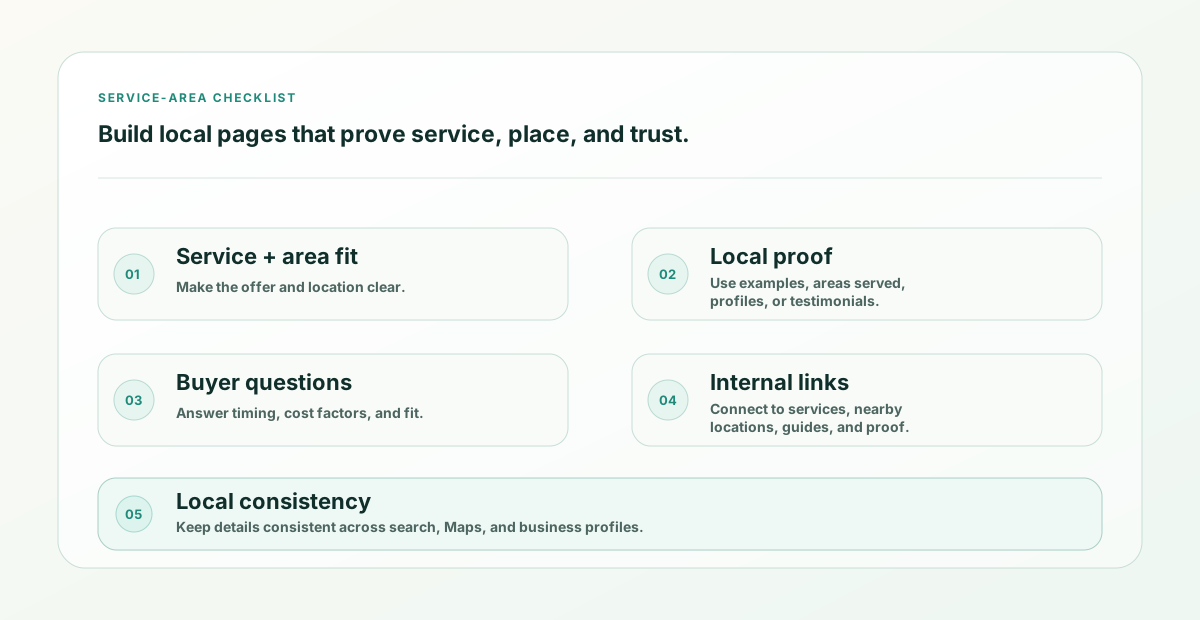
A strong service-area page proves three things quickly: what you offer, where you offer it, and why buyers in that location should choose you.
Clarify the service and the area
The page should make the service obvious before the reader has to work for it. State what you do, who it is for, which location or service area the page covers, and which problem the page is built to solve.
A weak local page usually talks about the city without explaining the actual service. A stronger page connects the location to real buyer intent.
Add proof that belongs to the location
Location proof makes the page feel real. That can include local project notes, service coverage details, testimonials, delivery areas, nearby neighborhoods, photos, business profile consistency, or examples that show you understand the market.
The proof does not need to be long. It needs to be specific enough that the page does not feel like a template copied across cities.
Answer the questions local buyers ask
People searching with location intent often want practical answers: whether you serve their area, how quickly you can help, what the process looks like, what affects cost, and whether the business has handled similar work nearby.
- Which services are available in this area?
- What types of customers or projects fit best?
- What should a buyer prepare before contacting you?
- What nearby areas do you also cover?
Connect the page to the rest of the site
Internal links help search systems understand the page's role. Link the service-area page to the main service page, nearby location pages, related guides, and any proof pages that support the offer.
This helps users move naturally through the site and helps search engines understand that the location page is part of a wider service system.
Check local consistency before publishing
Local pages perform better when they match the business details search systems see elsewhere. Review names, services, locations, contact details, business profiles, schema, and on-page wording before treating the page as finished.
What RUFHUB checks on service-area pages
- Whether the page has a clear service and location match.
- Whether the copy answers real local buyer intent.
- Whether proof, testimonials, or examples support the area.
- Whether internal links connect the page to the right service and nearby pages.
- Whether Google Business Profile and local consistency issues could weaken trust.
Need local pages that do more than name cities?
RUFHUB can review your service-area pages, find weak local intent signals, and plan the pages or fixes that help buyers trust each location.
Explore technical and local SEO