
SEO audit
How to spot the search pages your competitors are quietly winning
Competitor gaps usually hide in plain sight: service pages you never built, local pages that answer intent better than yours, comparison pages that catch buyers earlier, and authority signals that make another brand easier to trust.
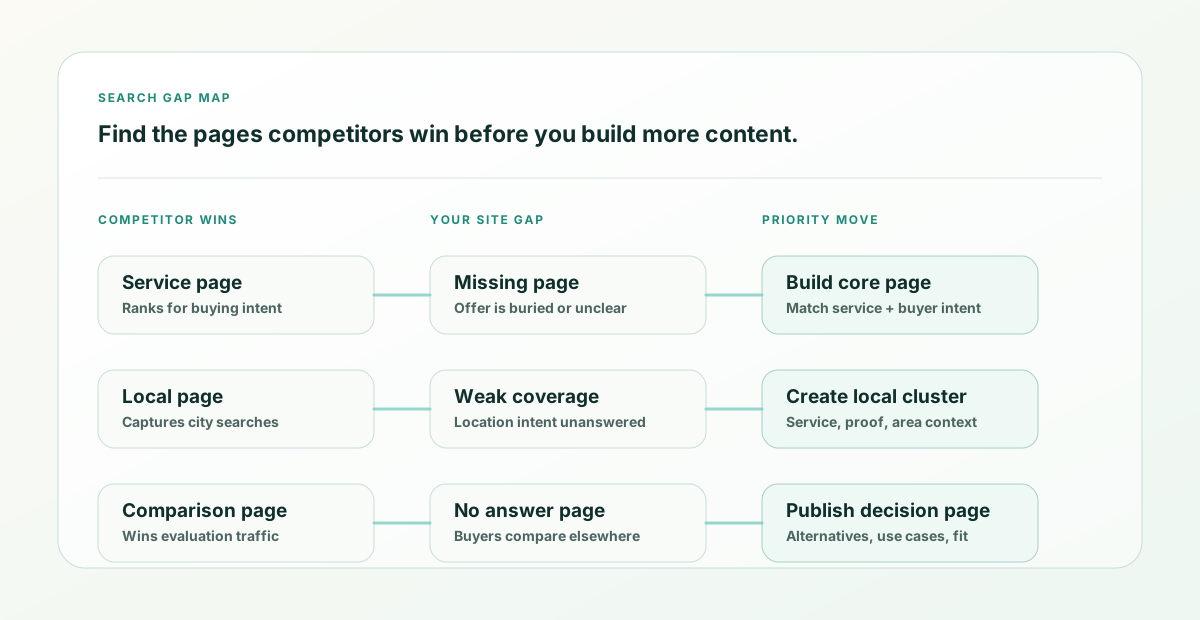
A competitor gap is not just a keyword you do not rank for. It is usually a missing page, a weak answer, or a trust signal your competitor has made clearer than you have.
Start with the pages that make money
Do not begin with every keyword a competitor ranks for. Start with the pages that connect directly to buying intent: service pages, pricing pages, comparison pages, industry pages, location pages, and pages that explain who the offer is best for.
These pages matter because they influence the buyer while they are still deciding what to request, who to trust, and what kind of provider fits the job.
Separate ranking gaps from page gaps
A ranking gap says another site appears for a query you do not. A page gap explains why: your site may not have the right page, your page may be too broad, or your content may not answer the buyer's actual question.
- A competitor has a dedicated service page while your offer is mentioned only inside a general page.
- A competitor answers local intent with a useful city or service-area page.
- A competitor has comparison content for buyers still evaluating options.
- A competitor has stronger proof, citations, backlinks, or internal links around the page.
Check what the winning page is really doing
Look beyond the title. A useful competitor page usually has a clear offer, specific audience, proof, pricing context, FAQs, internal links, and a next step. If the page feels more useful than yours, copying the keyword will not be enough.
The goal is not to clone the competitor. The goal is to understand which buyer question they answer better, then build the clearer page for your own offer.
Prioritize gaps by intent and effort
Not every gap deserves a new page immediately. A practical audit groups opportunities by business value, difficulty, and how close the search is to revenue. A small set of high-intent pages usually matters more than a long spreadsheet of low-value terms.
- Fix or build pages that explain the core offer first.
- Strengthen pages already close to ranking or converting.
- Add local pages only where location intent is real.
- Use authority work when the page is strong but trust signals are thin.
What RUFHUB checks in a search gap review
- Commercial pages competitors rank with that your site lacks.
- Weak pages that need clearer service, GEO, or local intent signals.
- Questions buyers ask before they request a quote.
- Internal link gaps around important service pages.
- Authority and backlink signals supporting competing pages.
Need the gaps mapped before you build?
RUFHUB can review your competitors, find the pages they are using to win search visibility, and turn the findings into a focused priority list.
Explore SEO and AI visibility audit